A practical guide to mattress construction
Naturepedic and Healthy Choice: Comparing Organic Mattress Construction
“Organic mattress” sounds like a simple description. In practice, it is a beginning, not a conclusion. Comparing Naturepedic and Healthy Choice means looking past the label to the layers beneath it: what they are made of, how they are assembled, what supports the sleeper, and which details are documented clearly enough to verify.
Start with the construction, not the promise
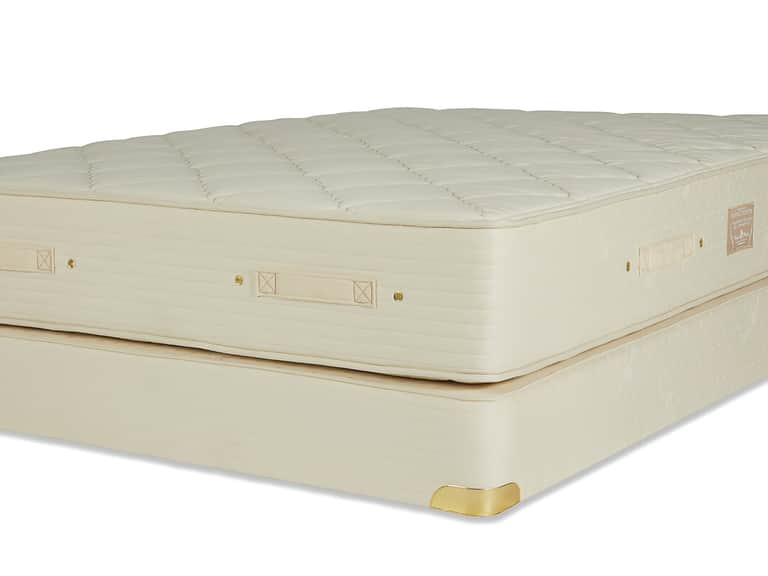
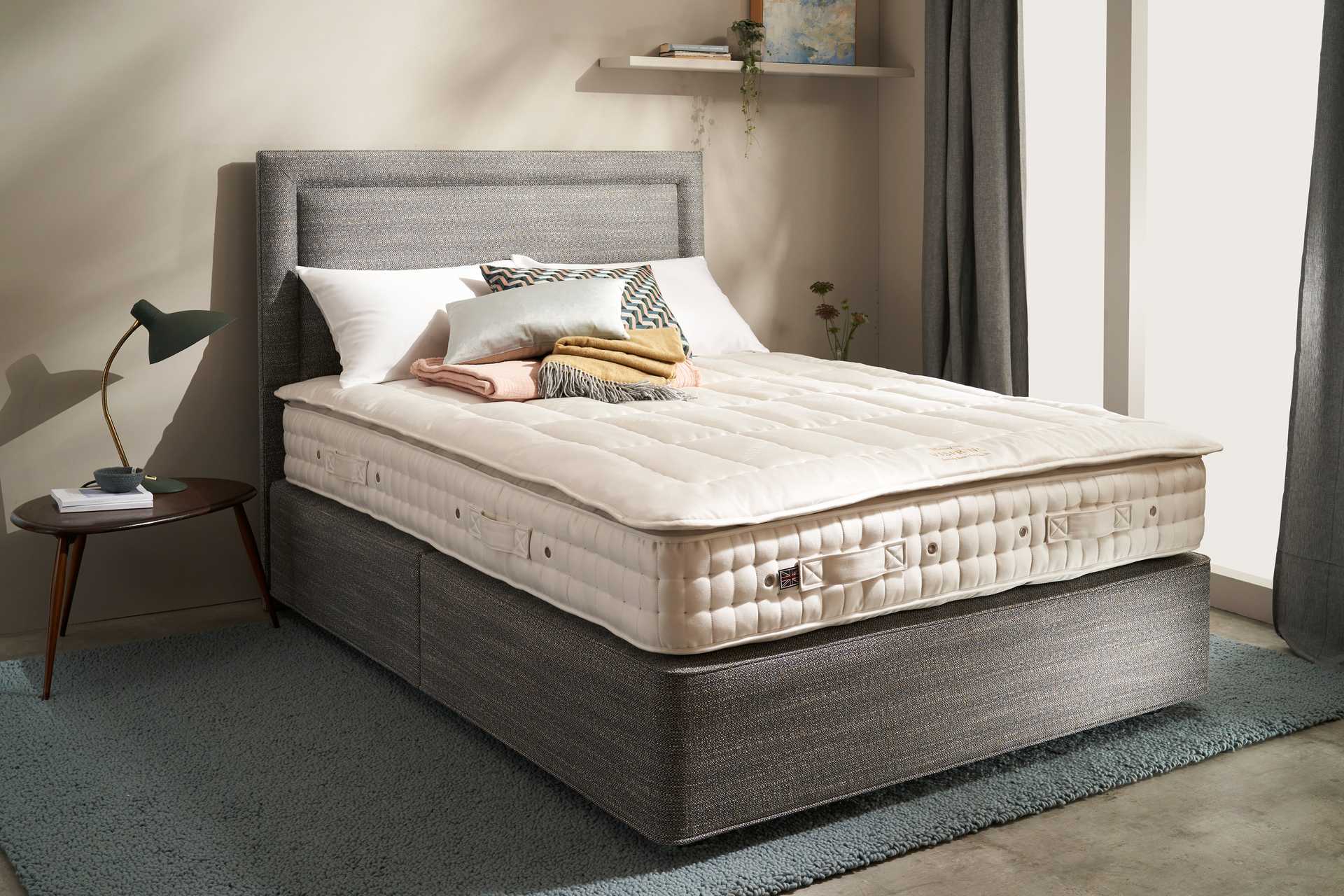
A mattress is a small architecture: a foundation, a support system, comfort layers, and a cover, each influencing the work of the others. The cover meets the sleeper. The comfort layers soften or cushion the surface. The support core carries weight and helps determine how the mattress responds when someone turns, sits on an edge, or settles into a preferred sleep position. In an organic mattress, the same questions apply, with an additional inquiry: which materials are organic, which are simply natural or plant-derived, and how does the manufacturer substantiate those descriptions?
Naturepedic and Healthy Choice are names a shopper may encounter while researching organic and natural mattresses. Their product ranges and specifications can differ by model, and a brand-level comparison is therefore only a first pass. It cannot tell you whether one particular mattress is right for your body, your foundation, or your tolerance for a firmer surface. For that, compare individual models, using current product documentation rather than assumptions based on a company name.
That distinction matters because the word “organic” does not mean that every component of a finished mattress is certified organic, nor does it describe how the mattress will feel. It is possible for two mattresses to use broadly similar materials yet have substantially different constructions. One might place latex above a coil unit; another might use a thinner comfort layer over a different support arrangement. The result can vary in firmness, pressure relief, motion response, temperature feel, edge support, and durability.
A useful comparison is less like choosing a side in a contest and more like reading two recipes. The ingredient list matters, but so do the quantities, order, and method. “Cotton,” “wool,” “latex,” and “steel coils” tell you something. They do not, on their own, tell you the whole story.
What to look for in the layer stack
Begin by asking each brand for a layer-by-layer description of the specific model under consideration. A helpful specification identifies the material, its position, and—where available—its thickness. If a product page uses broad phrases such as “natural comfort layers” without naming their composition, look for a detailed materials sheet or ask the manufacturer for clarification.
- Cover and quilting: Identify the fabric, any quilting layers, and whether the cover is removable or intended to remain in place. A cover affects the first impression of softness and can influence airflow and care routines.
- Comfort layers: Look for materials such as latex, wool, cotton, or other fibers, and establish how thick each layer is. A material’s position and quantity can matter as much as its name.
- Transition layers: Some designs use a layer between the surface cushioning and the support core. Ask what it is made from and what role it plays in the construction.
- Support core: Determine whether the mattress uses pocketed coils, another spring arrangement, latex, or a combination. Ask how the system is configured and whether the manufacturer publishes relevant details.
- Fire barrier: Find out what materials serve as the fire barrier and how the finished product meets applicable requirements. Do not infer this from a general claim about natural materials.
- Finished height and weight: These practical specifications can affect fitted-sheet compatibility, bed-frame fit, moving, and the ease of rotating or handling the mattress.
For Naturepedic and Healthy Choice alike, the essential exercise is to place model-specific construction information side by side. If one company provides more detail on a particular model, that is useful for comparison, but it does not automatically prove that the other mattress is inferior. It may mean that more information is needed before reaching a conclusion.
Materials: similar words, different meanings
Organic mattress descriptions often bring together several material categories. They should not be treated as synonyms. “Organic” usually refers to a defined production and certification standard for a particular material. “Natural” can describe origin, but does not necessarily identify a standard or prove that a finished component is free from every substance a shopper might wish to avoid. “Plant-based” may describe an ingredient without explaining how much of the material comes from that source. Precision is more useful than a reassuring adjective.
Cotton and textile covers
Cotton may appear in a mattress cover, a quilted panel, or a layer within the construction. Check whether a claim applies to the fiber itself, the textile, or the complete mattress. Ask whether the cotton is certified organic and whether the certification covers the finished textile or only an input material. The distinction can sound technical, but it is simply a matter of scope: what exactly has been examined, and what exactly does the claim cover?
Also consider the practical qualities of the cover. Is it meant to be spot-cleaned? Is it removable, and, if so, is it washable? A zippered cover does not necessarily mean that washing is recommended. Care instructions should come from the manufacturer, not from the appealing idea that a removable cover is automatically a washable one.
Wool and other fibers
Wool may be used in quilting or as part of a fire-barrier design, among other purposes. It can affect the surface feel and how the bed manages moisture and heat, but its presence does not tell you whether the mattress will feel cool to every sleeper. Climate, bedding, room temperature, the sleeper’s own comfort, and the rest of the layer stack all contribute to the experience.
Ask what type of wool is used, where it appears, and whether the manufacturer identifies any relevant certification. If a brand describes a fire barrier as wool-based, verify the statement for the precise model. Materials and designs may vary across a product line.
Latex
Latex can serve as a comfort layer, a support layer, or part of a hybrid arrangement. Its feel depends on more than the word “latex”: thickness, firmness, formulation, and placement all matter. A shopper comparing Naturepedic and Healthy Choice should determine whether latex is used in the particular models being considered, how much is present, and whether the brand specifies its source and processing method.
People with latex sensitivities should consult the manufacturer and, when appropriate, a qualified clinician rather than relying on general marketing descriptions. The construction details available to the shopper may not answer every health question, and no single material label should be treated as individualized medical advice.
Foams and blended components
Some mattresses use foam layers, including formulations described as plant-based or made with a portion of plant-derived content. Those descriptions do not mean that the foam is entirely plant material or that it carries organic certification. Ask for the full composition and any applicable standards or certifications. If the materials list is incomplete, treat that as an open question, not an invitation to fill in the blanks yourself.
Support systems: coils, latex, and combinations
The support core is where construction becomes especially consequential. A coil mattress does not have one universal feel. Coil design, arrangement, gauge, number, zoning, edge reinforcement, and the materials above the springs can all affect how it responds. A published coil count may be informative, but it is not a complete measure of quality or suitability. Counts can be reported for different mattress sizes, and a higher number alone does not establish better support.
Pocketed coils are individually wrapped, allowing coils to respond with some independence from their neighbors. Other spring systems may connect coils more directly. Neither description tells the whole story: the comfort layers, edge treatment, and the sleeper’s body and sleeping position all contribute to the actual experience. If Naturepedic or Healthy Choice offers a coil-based model, compare the specific system and the surrounding layers rather than assuming that the brand name predicts its feel.
A latex support core behaves differently from a spring unit. Latex tends to respond across a continuous surface rather than as separate metal springs, though the exact sensation depends on the latex and the design. A hybrid combines support technologies, often coils and foam or latex, and may offer a balance of characteristics—but “hybrid” is a category, not a performance guarantee.
Ask both companies whether the mattress is intended for a particular kind of base. Some constructions may require a firm, supportive platform or a specified slat spacing. A mattress placed on an unsuitable foundation can feel different from the way it was designed to perform, and may not meet warranty requirements. Verify the required base before purchase, especially for adjustable beds, platform frames, or older foundations.
Firmness is a result of the whole design
Firmness is often presented as a number or a word—soft, medium, firm—as though it were a stable property that every sleeper would experience identically. It is not. A mattress can feel different to two people because they differ in body weight, shape, sleep position, and personal preference. Even the way a mattress is supported can change the impression of firmness.
Construction offers clues, not a reliable substitute for trying a mattress. A thicker, softer comfort layer may create more initial cushioning; a firmer or thinner surface may feel more direct. But a thick comfort layer does not automatically mean a mattress will be soft, and a coil core does not automatically mean it will be firm. The materials work together, and the sleeper completes the equation.
Side sleepers often pay close attention to pressure at the shoulders and hips, where the body meets the surface. Back sleepers may focus on whether the mattress feels supportive without leaving the lower back uncomfortable. Stomach sleepers may prefer a surface that does not allow excessive sinking, although individual needs differ. For combination sleepers, ease of movement and how quickly the surface responds can matter.
When comparing a Naturepedic model with a Healthy Choice model, be cautious about treating firmness labels as directly interchangeable. A “medium” rating from one maker is not necessarily identical to a “medium” rating from another. Check whether the rating is accompanied by a scale, a description of the intended feel, or a clear explanation of how it is assessed. If possible, test the mattress in person and spend more than a brief moment lying on it in your usual sleep position.
Certifications: read the scope, not just the badge
Certifications can help shoppers evaluate claims, but a logo is not a complete materials list. Different programs assess different things: an agricultural process, a textile supply chain, emissions, chemical content, or a finished product’s compliance with a particular standard. A certificate associated with one layer should not be assumed to cover the entire mattress.
For each Naturepedic or Healthy Choice model, record the name of the certification, the component it applies to, and the organization that issued it. Then check whether the certification is current and whether the product or material falls within its stated scope. If the manufacturer says a mattress is certified, ask for the certificate or a precise explanation of what is certified. The question is not meant to be adversarial. It is the ordinary due diligence that makes a technical claim useful.
Separate material certification from performance claims. A certification may provide information about a material’s sourcing or testing, but it does not by itself tell you whether the mattress will relieve pressure for you, remain comfortable for years, or suit your sleep position. Conversely, a mattress may feel comfortable while offering a materials description that is too vague for a shopper who prioritizes certification. These are related, but distinct, considerations.
Certifications also do not replace a full product specification. If you are sensitive to a particular material, verify that specific ingredient and ask how the mattress is constructed. If you are concerned about emissions or chemical exposure, look for standards that address the question you actually have, rather than treating “organic” as a universal answer.
A practical comparison checklist
A useful comparison can fit on one page. Make a column for each exact model, then fill in the same questions for both. Where the manufacturer has not provided an answer, mark it “not specified” rather than guessing. The gaps are part of the comparison.
| Question | Naturepedic model | Healthy Choice model |
|---|---|---|
| What are the cover and quilting made from? | Record the stated materials and certifications. | Record the stated materials and certifications. |
| What are the comfort and transition layers? | Note materials, order, and thickness where published. | Note materials, order, and thickness where published. |
| What is the support core? | Identify the coil, latex, or combined system. | Identify the coil, latex, or combined system. |
| What does the firmness description mean? | Record the scale or explanation, if provided. | Record the scale or explanation, if provided. |
| Which certifications apply? | List the certifier, component, and scope. | List the certifier, component, and scope. |
| What base and care does the maker require? | Confirm foundation rules and care instructions. | Confirm foundation rules and care instructions. |
Once the chart is complete, add the practical terms that affect ownership: trial period, return conditions, warranty coverage, delivery method, and any required foundation. These are not construction details, but they influence how much uncertainty a shopper must accept. Read the current terms carefully. Warranty language may distinguish manufacturing defects from ordinary changes in comfort or wear, and trial conditions can vary.
How to compare the two brands without overclaiming
It is tempting to end a comparison with a winner. That is often the least informative conclusion. Naturepedic and Healthy Choice may offer different approaches across their respective lines, and a broad brand-versus-brand verdict can obscure the choice that actually matters: which construction, in which model, suits this sleeper and meets this shopper’s standards for materials and documentation?
Instead, describe the evidence. If one model publishes a complete layer stack and the other does not, say that the first is easier to assess from the available information. If both disclose their materials but use different support systems, explain what those systems may mean in general terms while avoiding a promise about how either will feel to every person. If a certification applies only to a component, identify that boundary.
Do not treat the price, the word “organic,” or a list of materials as a shortcut to durability. Longevity depends on design, use, maintenance, foundation support, and the sleeper’s expectations. A mattress can be made from appealing materials and still be a poor fit for a particular body or preference. A less elaborate specification may also deserve further inquiry rather than immediate dismissal.
The most responsible conclusion is often conditional. A shopper who values a particular material may favor the model that uses it in a clearly documented way. Someone who needs stronger pressure relief may put greater weight on comfort-layer design and an in-person trial. A buyer focused on verification may prefer the product whose certifications and component descriptions are easiest to confirm. There is no universal ranking that can replace these priorities.
Questions worth asking before deciding
- Can you provide the complete layer order and thicknesses for this exact model and size?
- Which components are certified organic, and which certifications apply to the finished product rather than an individual material?
- What is the source and composition of the latex, wool, cotton, foam, or other fibers used?
- What support system is inside, and are there details about coil type, zoning, or edge construction?
- How is firmness described, and can I try the mattress in my usual sleep position?
- What foundation is required, and could an existing bed base affect support or warranty coverage?
- What are the care instructions, trial terms, return conditions, and warranty exclusions?
Clear answers do not guarantee a perfect match, but they make the decision more legible. If a response relies on general assurances while avoiding a straightforward question about materials or certification scope, keep asking or compare another model whose documentation is easier to evaluate.
The better comparison is the one you can verify
Naturepedic and Healthy Choice can be compared meaningfully when the exercise stays close to the evidence: model-specific materials, layer order, support design, certifications, and the practical terms of use. The word “organic” may open the door to a conversation about sourcing and standards, but it cannot answer questions about comfort, support, or fit on its own.
Take the time to distinguish a certified material from a certified product, a natural ingredient from an organic one, and a firmness label from a personal experience. Then consider how the mattress might work for your sleep position and preferences. A detailed specification is not glamorous, but it is a better companion to the buying process than a stack of adjectives. In the end, the strongest choice is not necessarily the mattress with the most persuasive description. It is the one whose construction you understand, whose claims you can check, and whose feel makes sense for the person who will sleep on it.