Beyond the Basics: A Practical Guide to Pocketed Coil Systems and Sleep Comfort
A careful, editorial meditation on the pocketed coil, its cousins Bonnell and offset, and what these systems reveal about contouring, durability, and the quiet arithmetic of sleep.
Divorced from marketing slogans and marketing-friendly glossaries, the pocketed coil is a technical whisper. It speaks softly of individual weight, micro-movements, and the stubborn, almost stubbornly human, requirement for a bed that feels tailor-made. This guide, grounded in the Direction B promise of practical, non-commercial education, seeks to decode the coil family in a way that readers can actually test in-store or at home.
Pocketed Coil Systems: What They Are and Why They Matter
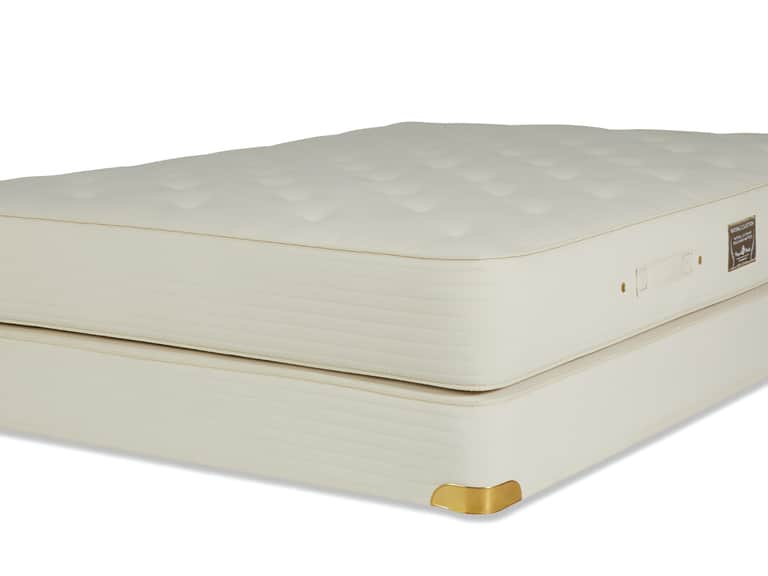
At the heart of a pocketed coil system lies a forest of springs, each encased in its own fabric pocket. This design minimizes the mutual influence of adjacent coils, a feature that translates into three practical benefits: improved contouring for different parts of the body, reduced motion transfer for sleepers sharing a bed, and a more even edge support along the mattress perimeter. In contrast, traditional Bonnell coils share a single frame, which can translate into less precise contouring and more notable motion transfer when a partner shifts in the night. Offsets sit somewhere in between—their continuous coil network offers different settlement patterns and resilience. The pocketed variant, however, advances a key principle: decouple the coil from its neighbors, so weight and pressure produce localized, predictable responses.
When a mattress uses pocketed coils, the sleeper can often experience improved pressure relief in critical zones—shoulders, hips, and lower back—without the cradling effect that can sometimes feel too all-encompassing on other innerspring designs. The bed becomes, in effect, a modular landscape where the upper body and lumbar regions can be supported with a degree of precision that was once the sole arena of premium foams—and then imported into the realm of natural materials and timeless craftsmanship.
Coil Gauge, Count, and Layout: The Architecture of Durability and Edge Support
The discrete nature of pocketed coils invites scrutiny of three mechanical levers that buyers often misunderstand: coil gauge, count, and layout. Gauge refers to the thickness of the wire used for the coils. In theory, a thicker gauge coil can translate into greater durability and support, especially in the midsection where body weight concentrates. However, the relationship between gauge and feel is not linear; better engineering, materials, and casing quality can yield superior durability even with a leaner gauge.
Count—the number of coils per mattress—contributes to the density of support points. A higher coil count can yield a more nuanced, responsive feel because tiny pressure changes are distributed across more independent springs. Yet, a very high count without complementary design considerations—such as coil distribution, edge reinforcement, and casing integrity—can degrade performance over time if the central support zones begin to sag or migrate.
Layout matters, too. The arrangement of coils—whether in zoned patterns, micro-tension configurations, or uniform grids—controls how a mattress channels weight and curvature. Zoned designs aim to supply extra support around the hips and lumbar spine, reducing shear and enhancing spinal alignment for many sleepers. The upshot: durability and longevity evolve as a system property, not merely as a function of raw coil count or gauge alone.
In-Store and Home Testing: Practical Guidelines
What follows are actionable tests and checks you can perform without disassembling a mattress or relying on glossy brochures. Start with a simple body mapping exercise: lie on your chosen mattress in your preferred position for several minutes. Note how the surface contour responds to your weight distribution. Is there a clear, even line of support from shoulders to hips, or do certain zones feel uncomfortably hard or unyielding? A well-constructed pocketed coil mattress should offer a balanced contour with consistent pressure relief across common sleep positions—back, side, and combination sleepers alike.
- Edge support test: Sit on the edge of the bed and shift slightly forward. Do you feel substantial resistance, or does the edge collapse under your weight? A durable edge helps prevent the sensation of rolling out of bed when you sit or sleep near the perimeter.
- Movement isolation check: Have a partner roll over or shift positions while you lie still. Observe whether movements are transferred across the surface. Pocketed coils can minimize motion transfer, but the degree varies with the layering, foam comfort layers (if any), and edge reinforcement.
- Firmness mapping: Test at least two firmness levels—one that you would typically choose, and a slightly firmer option. Note how each level supports your spine alignment and pressure points; the ideal result is minimal sagging in the lumbar region with even contact along the torso.
Practical Guidelines: Firmness, Sleep Position, and Warranty Interpretations
The bed you choose should not be a blunt instrument but a calibrated instrument of rest. For many sleepers, a medium-firm pocketed coil mattress yields a useful compromise between contouring and support. Side sleepers often benefit from slightly softer setups that cushion shoulders and hips, while back and stomach sleepers may gravitate toward firmer configurations that keep the spine aligned. Yet these guidelines are not universal. Body weight, bed partner movements, and personal tolerance for pressure relief all shape the right choice.
Durability metrics—and the warranties that accompany them—are essential reading for the informed buyer. Look beyond the surface feel and examine the coil system warranty, edge support warranty, and whether the warranty explicitly excludes standard wear. A robust warranty signals a manufacturer’s confidence in their coil technology and the stability of the entire system over time. Be mindful of terms around firmness retention: some warranties address compression and sag within a specified depth or percentile, which can serve as a practical barometer for long-term comfort.
Three Key Figures Across Time: From Craft to Science to Sleep
To anchor this discussion in a broader historical arc, consider three figures who illuminate different epochs of mattress evolution. Each represents a distinct angle: the craft of hand-tied systems, the scientific refinement of early mechanical engineering, and the modern, consumer-education-driven approach that informs this article.
-
Mary Fielding, 19th Century Bedding Artisan
In the era when the coil was still finding its social footing, artisans like Mary Fielding practiced the old craft of hand-tied spring beds, weaving natural fillings and bespoke tickings with meticulous attention to edge stability and longevity. Her work reminds us that even in the early days, the bed was a space shaped by craftsmanship that respected the body’s need for support and comfort. Fielding’s approach foreshadowed the modern emphasis on tailored sleep surfaces—an intuition that the best innerspring systems begin with careful material selection and precise construction, not merely a scalable mass-production process.
-
Johannes Kline, 1930s Engineer of Sleep
Kline’s era saw the ascent of mechanized manufacturing and systemic testing. He contributed to early research on coil geometry, gauge optimization, and the interplay between spring performance and upholstery. His work helps explain why industrial design—when executed with rigor—can produce mattresses that better hold up under daily use. While his era lacked the wellness narratives of today, the fundamental engineering problem remained: how to translate the subtle pressure patterns of a sleeping body into a resilient, repeatable surface. Pocketed coils, in this historical frame, can be read as a late-20th-century refinement of those very principles: decoupled, independent responses that preserve local contour without sacrificing overall stability.
-
Claire Bennett, 21st Century Sleep Education Advocate
In our current moment, the educational approach to sleep products has matured into a consumer-facing, non-commercial ethos. Bennett exemplifies this shift: she champions transparency, testable guidance, and evidence-based explanations that empower readers to evaluate coil systems without marketing pressure. Her work—much like this article—advances a shared understanding of how coil type, gauge, and layout translate into lived comfort. The modern discourse on innerspring technology is, increasingly, a collaboration between engineers, historians, and curious readers who demand clarity over rhetoric and data over noise.
A Practical Pocketed Coil Guide for Readers
As you navigate the world of innerspring mattresses, a pocketed coil-focused lens yields a reliable compass. Consider these distilled takeaways as you compare models:
- Favor mattresses with clearly described coil counts and zoned support patterns, but beware of inflated counts that do not translate into meaningful differences in support or durability.
- Prefer a structured edge reinforcement that promises consistent performance from the center to the edge of the mattress.
- Test firmness in multiple positions and at multiple angles to gauge whether the surface maintains spinal alignment without excessive pressure in the shoulders or hips.
- Review warranty terms for sag depth, coil integrity, and edge support, and compare those terms across brands to gauge long-term value.
Product Illustration: Vispring Opulence Mattress Topper as a Case Study
To ground our discussion in a tangible, representative example, we can consider a high-end topper like the Vispring Opulence Mattress Topper. This topper—crafted with a blend of platinum-certified British fleece wool, soft-needled British wool, and silk—exemplifies how layering a premium surface interacts with a pocketed coil foundation to influence the ultimate feel of a sleep surface. While toppers are distinct from the core coil system, their influence on temperature regulation, cushioning, and edge-to-edge uniformity complements the coil architecture. The Opulence topper’s materials contribute to temperature regulation and cushioning that can modulate the perceived firmness and contouring of a mattress with pocketed coils beneath.
The point is not to elevate toppers as the sole determinant of comfort, but to acknowledge how layered design—topper plus coil system plus cover materials—works in concert to shape sleep quality. In the realm of non-commercial, educational guidance, examining such combinations helps readers understand that their sleep environment is a system, not a single component.
Vispring Opulence Mattress Topper
Brand: Vispring • Type: Mattress Topper • Material emphasis: Wool, Silk, cushioning layers
Price: $2,415.00
Note: Image and pricing illustrative for educational discussion.
Editorial Note: Building a Non-Commercial Resource
In shaping a site about innerspring mattresses that eschews promotions in favor of clarity, the editorial project resembles a navigator’s log rather than a storefront. It aspires to present coil systems with precision, provide readers with robust testing methods, and illuminate the history of bed engineering without invoking marketing narratives. The aim is not to brand a product but to foster informed decision-making through accessible diagrams, plain-language explanations, and reliable standards references.
Conclusion: The Coil as a Living System
Pocketed coils are a modern articulation of an ancient human need: to rest with stability, contour, and a sense of personal space within the bed. As you survey the landscape of innerspring mattresses, remember that the strongest sleep systems are those that harmonize coil architecture, materials, and design intent into a coherent whole. The pocketed coil, in its quiet sophistication, stands as a reminder that comfort is both a physical phenomenon—the distributed support that follows your body—and a perceptual one—the confidence that, when you lie down, the bed will respond with a measured, dependable hospitality.